Categories
Design Music

Designing in real time and not a minute later

Projector rainbowI VJed at my first party last night! I’ve been playing at home for friends for a few months until last night  when I took the first step out into the wild and exercised my digits.

VJing is a broad designation for realtime visual performance. VJing is the manipulation or selection of visuals, the same way DJing is a selection and manipulation of audio. This results in a live multimedia performance that can include music, actors and dancers.  The subject of VJ-DJ collaboration also started to become a subject of interest for those studying in the field of academic human-computer interaction (HCI).
Wikipedia

I’ve been working in Modul8 to control the live, real-time look, feel, actions, motion and mixing of projected images. My friend Sarah composes her visuals in Resolume. Curious to commit to a weapon of choice, she and I booked a design jam to trade vj notes. She then invited me to get my feet wet and tag with her for the SF Haçeteria party at Deco Lounge. Having only used Resolume twice, worked with a midi controller once, being newborn fresh to Sarah’s compositions and having never VJed with video clips, there was a high probability I would produce visuals that look like they were Winamp visualizers circa 1998. Mostly excited, slightly hesitant, I said yes.

So here’s the thing. If you want to do something, you just have to do it. That’s what the people who get things done, say. It’s a Twilio mantra and is heartfelt advice from Ira Glass‘ talk on good taste.

Glass says, quite simply:

  1. You love doing this kind of creative work, so you do it.
  2. Because you have good taste, you can see what you’re producing. But, especially in the beginning, is not very good. In fact, it’s pretty crappy.
  3. There is only one way to get better. Do work. Do a huge volume of work.
I’m thankful I was reminded of this again by Public Works’ resident VJ, Howard Wong. He advised,

I think you should lock down a gig playing out. You’re going to run into a bunch of hardware/production issues. The best way to learn is to simply dive right in.

When Sarah very graciously invited me to join her I had no choice but to say yes, even with all the Winamp fears in hand. The night went great, the vibe was killer and the DJs spun everything from Acid House to 90s Technotronic tracks. Sarah set the stage and invited me to jump in soon after and start mixing some clips. She carried the set through the main singing act. After I hopped back in and then really got into a groove. Then we tagged back and forth before Sarah closed down the night. Party-goers were taking photos in the lights and grooving until close well beyond last-call.  I recorded 6 seconds of my compositions for you:

Though I missed beat drops and confused a few layers from one another, I did it–and that was the big win. I did eventually get my bearings enough to find my rhythm and make compositions that felt like my work. I composed somethings I liked and got to say something to the world. We made that tiny little spot in the Tenderloin a better space for people to meditate and move their bodies to music.

A handful of our friends came out to see Sarah play and discovered me behind the proverbial curtain. Keep good people in your life, good things will happen. I heard words ringing in my head that I had been sprouting off to my peers launching creative endeavors. I’ve been saying, “We, we your friends, we want you to be successful. Our reflex behavior will be to support you, encourage you to grow and pursue happiness. Go do the thing that you cannot not do. We’re cheering you on. “What is more joyful than seeing people you care about find fruits and joy from their labor? And those friends did just that.

I’m humbled by the invitation to design for motion, color, sound, lights and the immediate, immersive experience for people. It’s more than I could ask for and is really really fun.

Follow visuals.ninamehta.com for my clips and book me for your party.

Categories
Design Journalism

Election day

As female California transplant of immigrant parents, I'm still pretty exited about my right to vote.

I thank the suffragists and founding fathers who worked to the death so I have a voice today. These people worked to empower states the power to protect us from the State. The protected us from a monarchy and gave us the right to assemble. Because of their labors I have a right to speak for or against my government, I can enjoy a free press.

I am a woman. I am a minority. I am of immigrant parents. I am a newly registered voice in California. For me, voting is a gift, a right and a responsibility.

In journalism school, we were taught to think of the news profession as the fourth branch of government. The The Executive, Judicial and Legislative check on each other and the media, the news, the people, that is, checks on the government.

The government was supposed to be for the people, by the people. The press is supposed to be that too. But as the little guys get swallowed up, major media does not feel like us, the people. Then there is civic journalism, which has maybe evolved into our blogosphere. But now, unlike ever before, each individual (with an internet connection) has a media platform, a voice–an opportunity to exercise their first amendment right to speak, which I discuss in my conversation about David Nord’s book Communities of Journalism.

A free and prospering press shall offer multiple voices and perspectives, thereby checking on each other. We can debate whether or not that is still happening, but that conversation is tied up in discourse about ad revenue and reader apathy.

This conversation is about empowerment. I want to celebrate the democratized internet and the power to empower. I have the luxury and honor to work on a product that empowers people to build, make, enterprise, innovate and design the world in which we want to live.

When I turned 18 registered to vote and signed up to work at  my local polling place. I took classes on foreign policy , journalism writing and newspaper layout. I worked on election day again, but this time from the newsroom and I had the honor to be the voice of my community. Thankfully, I still get to make something that empowers a community. Today I celebrate my voice as a designer, a writer and civic participant.

Thank you to all the candidates running today who also believe a better society starts at home. Today it is my right and my honor to celebrate a most American holiday: Election Day!

Categories
Design HCId Language

I’ll call you from Twilio

Today I join Twilio in San Francisco as their newest designer. Twilio makes powerful tools that empower people to build communication apps on voice and SMS. Joining Twilio’s outstanding team is humbling and massively exciting. I’m inspired to work with a group that helps people to realize great ideas, build a better society and of course, improve communication.

Improving how we share information has been a thread throughout my career. From my days in narrative as a news designer, to working on the chat app at RockMelt to disrupting the translation industry at myGengo to the core of my design thesis, I’ve been thinking about this space. I’ve nestled up with big questions to understand how humans share information and communicate. Plus, I just love developers. Twilio could not have been a more perfect next step.

I’ll be working closely with Andres Krogh, Rourke McNamara, Danielle Morrill and many more stellar Twilions blending my interaction design and marketing chops. There’s a lot to learn and a lot to teach. Please join me in celebrating this exciting new chapter on my path.

Where’s Nina?
This year took me through 12 cities in 4 continents. Between the time of someone asking “where are you?” and me being able to answer, I was somewhere new. So here’s how 2011 played out.

Combi StopI celebrated the commencement of the year Cape Town on a life-changing trip to Southern Africa with the perfect travel mate. I saw a dear childhood friend and did research to inform my graduate school thesis. In the flutter of a tweet, I earned my Master’s and started packing boxes to pick up nearly a decade of my life spent in beautiful Bloomington, Indiana.

En route to San Francisco, I worked in Tokyo with myGengo, like Twilio, in the 500 Startup powerhouse. I learned from their brilliant team and earned intense design empathy and mountains of personal growth. Call it Manifest Destiny if you will, but I started working my way West. I skipped through Detroit and Chicago and did projects for with SigFig, Milewise and Posterous while planting my feet in San Francisco.

Burning I spent a week under extreme conditions in the dessert that taught me important lessons about design and experience. It yanked everything human about me to the surface of my being and I truly went through a Rite of Passage.

I went to St. Louis to see old friends from my journalism world at the Society for News Design’s conference. I talked on a panel about careers as a 5 year reunion from SND’s first intern competition and got to thank so many mentors who raised me as a professional.

It’s taken me years of patience and an unreal amount of work to build the life I now have in San Francisco. I couldn’t have predicted most of what happened this year and I can’t say what the future holds. But 2011 is not over yet and I’m having the time of my life on this ride.

Nina Mehta is a designer and writer living in San Francisco, working at Twilio.

Photo courtesy Jeff Lawson.

Categories
Design HCId

What designers can learn from Burning Man

Burning Man

Upon departure to a week of dancing, meditating, bike riding, art project exploring and big dreaming in Nevada’s Black Rock Desert, I wrote a cheeky little e-mail to my office.

Email to my colleagues about Burning Man

They all knew I was taking my first trip to the Playa, but still, I sent out this courtesy note. “Team, I’ll be out of the office next week without access to the internet,” I wrote. I gave myself the permission to divorce from communication mediated by technology. I spent the week having collocated interactions with people. I had human-to-human conversations that over flowed with emergent ideas and were loaded with implications from body language.

“I’ll be in Black Rock City, Nevada” I said, which for a week is actually Nevada’s 4th largest city and otherwise non-existent. For 7 days, 50,000 people gave gifts of music, food, teachings, photos and so much more.

I was given so much in Black Rock City. My bike pedal broke twice while on the Playa. The city is too big and the weather is too extreme to commute by foot. I found a bike-expert in our village of 170 people. He found a piece of wood and told me to search neighboring camps for a saw. I kid you not, he prototyped a peg-leg wooden bike pedal for me. And within and hour, my new friend, with his big heart, gave me the city back.

Burning Man

I’m “doing participatory, ethnographic research” I continued to my teammates. I immersed myself in an environment that was beyond foreign to me. I was living in a sci-fi novel. Yet, people repeatedly said, “wow, you’re really in your element here.” Socially, geographically, culturally, economically, I had a new lifestyle. As someone who studies people, their desires, their wants, the emotions, their motivations, there was so much to learn here. In my life of international travel, I have consistently found humans to be relatively the same all over the world, in the most beautiful way. Stripped down we share our qualities that make us human, our desires, our challenges, our drives. So here, at Burning Man, were people any different? What do we do when the societal rules change?

Other Worldly Take away money, take away time, take away digital devices, are we the same? Pretty much.

I cooked for my camp each night. I started cooking dinner when the sun was a few inches from the peaks of the mountains. The camp knew when the sun goes down, dinner is ready. There was no 15 minutes late, time was about light.

We had some friends who camped about a mile away. In the afternoon we asked if they wanted to hang out at night.

‘Sure. just come by later. I don’t know what we’ll be up to.’ So sure enough we suited up with headlamps and coats. It was like an after-dinner ritual. We tricked out our bikes with El-wire trimmed wheels and loops of glowsticks on our handlebars. There are no streetlamps in the dessert, so we, ourselves need to be illuminated. There are thousands of commuters and yet not many bike crashes. People take care. Culturally, it’s understood to keep yourself lit as a method of identity and expression but also as a way to be visible and safe.

Burning Man

So, we rode over to our friends’ camp and, after all that, they weren’t there. We kept riding, it was no big deal. It was like the 90s. There was no follow up game of sms ping-pong or trying form a tweet-up. We just kept riding. We found something new to do and you know what? It was so fine.

So I told my colleagues, I’m doing research on “urban development.” Before campers arrive and after they leave, Black Rock City it’s an empty desert. Everything there is intentional, something that is there is because someone has brought there, it’s designed. Nothing remains from last year except the dust.

How would people build a functioning city in a week? What does a new city look like? It has bike repair pros, spas and brunch spots and a census. I worked in the post office and our neighborhood bar. If we could build a city and roads and culture and economy, just for a week, what’s a better way to do it than the way it is where we live? And every year Burning Man must be different because every year, the people change.

Burning Man

“User experience,” is something I listed I was researching. I thought a lot about what I read in grad school by Plato, by Dewey, by McCarthy & Wright, by Russon and their philosophies of experience. Burning Man helped me meditate on the Sensual, Emotional, Compositional and Spatio-Temporal 4 threads of experience. These are the same threads that weave into our every day lives but are center but at Burning Man are imposed front and centered. We’re faced with manufactured, designed art projects juxtaposed against the backdrop of the sun as our clock and the desert as the canvas. We have only one objective measure of time, then sun, and half way through the daily cycle, the sinks behind the mountains and without our anchor, the night is infinite.

If you were so lucky to dance all night in the dark, cold desert, you might have heard Lee Burridge play a siren songs to beckon the sun. And with the last drags of our tired feet, we turn our backs to the DJ, gaze to the horizon and see the edges of light peak above the Earth and the next day begins. There is no alarm clock.

Burning Man

“and human-computer interaction design.” was the last point I said I’d be researching. There we are, 50,000 people, doing whatever we love to do most, for a week, with our friends, some new, divorced from communication technology. And yet, in this natural, beautiful place we  are still immersed in a space with impressive light design, massive sound systems and volts of power thumping through generators to power the art and music projects.

Burning Man I got to see how else humans and computers can interact with each other. That being, humans and humans, computers and computers and humans with computers. We do it all with dust in boots and sweat on our brow. We have a lot left to learn about what we as people want and need and how we’re going to get it, if we ever do.

But having dropped myself in some places that are beyond other-worldly, I’ve learned how delicate our fleshy, vulnerable, skin and bones and hearts are. If we’re going to design chairs and phones and streets and clocks and code whatever else it is that we design, let’s give our work voice and human touch. Someone, some person, will be using it.

The Financial Times wrote an articulate piece about the village in which I stayed at Burning Man, The Chillage. You may enjoy April Dembosky’s article Turn off your phones, techies, welcome to Burning Man.

Categories
Design

How to test your product with people

P1040418

User testing is a seemingly giant mystery. Having formerly worked as a journalist, asking mountains of questions to someone I’ve never met before is like second nature for me. I moved to ‘Silicon Valley’, land of the startups, a couple of months ago and have since been getting asked a lot about user testing from engineering friends. It’s possible to start putting your product in front of people without having a UX homie in the house.Below are 11 practices I follow that help inform better product design. I learned and did these things at myGengo, RockMelt and in graduate school. The list below is not holistic and may not work for your team or product. Use your best judgement, it’s qualitative research. And designers, I invite you to critique these points.

  1. Test the product, not the person. “Thanks so much for coming in, we really really appreciate it and value your feedback. Our product is still in the early stages and we want to find out what is confusing and what doesn’t work. You can quit any time and the more things you can find wrong with it, the better. It’s also helpful if you talk outloud while you’re using [product]. It helps us know what you’re thinking and when you’re stuck.”
  2. Be an excellent listener. Be humble. If you disgaree with an opinion, keep it to yourself and make a note of it on paper.
  3. Think of the guest coming in as a person, not a user. I avoid the word ‘user’ as much as I can but sometimes it creeps in. Get to know them, discover who they are as people. Just hang out for a few minutes until you’re both comfortable.
  4. Take notes on paper, not on your laptop or phone; it makes you the ‘magical computer person’ more accessible and human. It’s ok if you need a computer open to chat with people in another room or do some recording. Digitizing notes afterwards is a good idea.
  5. Avoid leading questions that impose a value. Avoid: “Do you think this is a good color?” Instead ask “What do you think about this color?”
  6. Know what you want out of the session. What features are you testing? There’s a fine balance between keeping the session open ended and getting what you want out of it. But in the end, you are leading the session. If you are going down a path where you are learning something interesting, follow it and probe with questions. If you find yourself in a time suck, take back the lead. Make note of  body language and facial expressions.
  7. Ask about expectations: “It seems like that button was hard for you to find, where did you expect to see it?”
  8. Don’t be scared of the people coming in. They’re just people. But, like sharks, they’ll sense your fear.
  9. Aim for a half an hour session padded with questions at the front and the end. Eventually,both of you will get tired. Pad a little time in between sessions for you to recenter.
  10. Debrief after the session with your guest and the team. Thank them graciously for their time. Ask if you can send follow up questions later. I like to organize my findings as follows (and props to Matt Beebe for this structure)
    • a. engineering bugs (broken button)
    • b. design bugs (misaligned pixels)
    • c. backburner (possible problems, feature requests, things that need deeper thinking or data analysis)
  11. Have fun

Tips from uxperts to help you get started


Categories
Browsers Design

Hey browsers, are we there yet?

Road Trip, South Africa
Quite simply no. Dave Winer recently wrote “web browsers are done. Feature complete.” I refute this for a reason I perceive to be quite obvious: browsers must keep changing because people keep changing. Their needs, their wants, their economies, their mood and their lifestyles all influence what needs to be done next for the web.

URLS
How we get to wherever we’re going on the web has already changed. When the web formally and broadly platform for how we distribute information and communicate it will become more obvious why browsers have a long way to go. With Icann’s announcement to increase domain suffixes available, we could potentially travel to http://fanta.coke or http://maps.google instead of a traditional .com, .org, .gov suffix. Chrome released the omni bar which merged manual URL entry and the search for content. Browsers (on many devices) serve as portals to information and the web as as a platform for Saas then there is much work to be done. URLs are fading to the background as a primary way to navigate to information we seek.

Saas
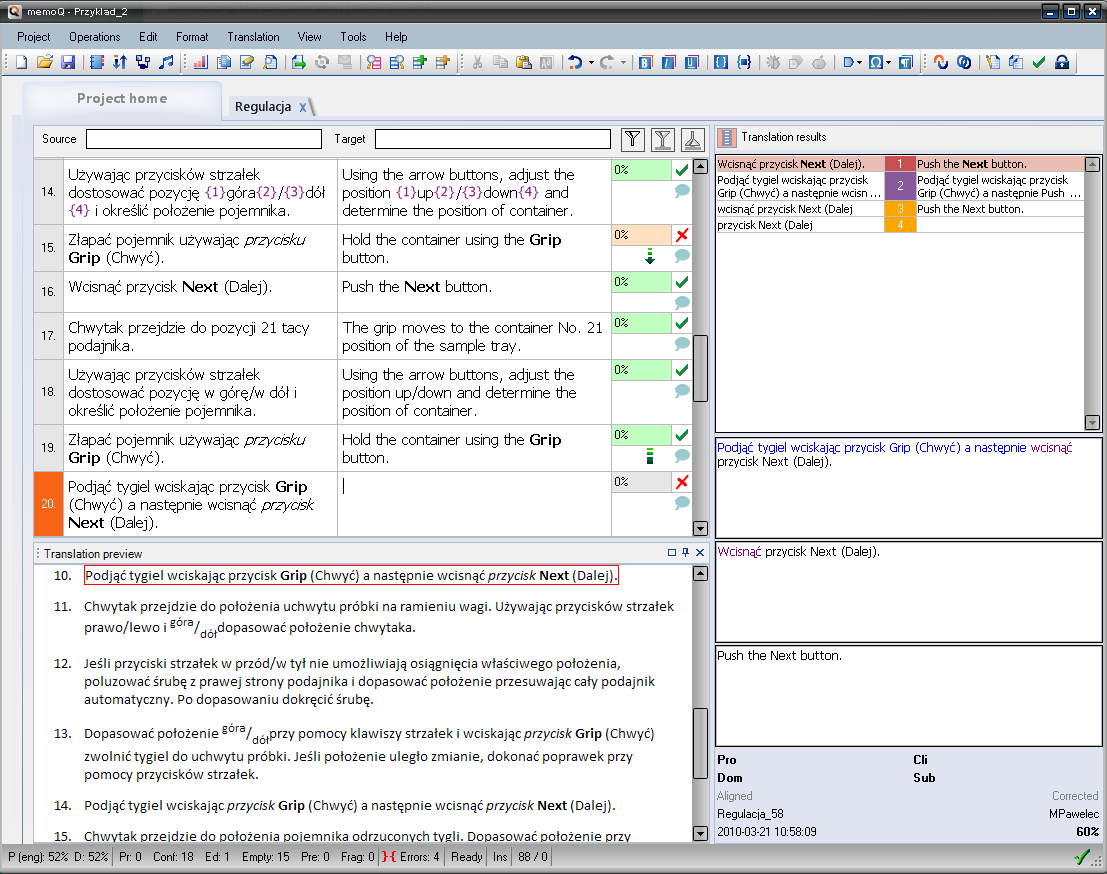
At myGengo, I worked on a web-based UI for translators (not shown). Before they were either using Microsoft Word or a plain text editor. Professional translators who do mountains of translation use professional tools like MemoQ (right). The software allows translators to work relatively efficiently but a lot of UX needs are unmet. I worked on this problem. My goal was to improve what myGengo had already built and weave in the powerful features these pieces of software have. I needed to do it in a way that makes sense and moves the language, translation and communication industry forward. All of course, to be done within the browser.


Universal Logins
I worked on the alpha launch of RockMelt. What their service does better than any other browser is the universal login. It’s front facing, it’s required, it gives users more context and it’s quite clear what happens as a result of the login.  If or when they (or Chrome or Firefox) leverage universal logins beyond personalized data synced, I think we’ll see more fluid way to explore the web. When we can eliminate or reduce login barriers while still offering personal security and stability and clear communication to users what has been done, we will move the web forwards.

Chat across tabsThe CR-48 Chrome Notebook (rigt) seems to be working towards this goal I reviewed the Chromebook in April. To promote an idea that the web is where we can do all of our computing is an idea they are working to materialize. It has a ways to go but the philosophy is not wrong.

‘RockMelt is just a bunch of plugins’
I get a lot of questions about RockMelt. They recently raised $30 million in funding and people ask me why. They tell me it’s either too noisy or it’s the same as all the apps or plugins they’ve added to Chrome or Firefox. How many people know what a browser is, how many know what a plugin or app is? I don’t have the numbers but my prediction is quite low.

When people ask about Rockmelt, I say:

  1. RockMelt users LOVE the RockMelt. First and foremost. And it’s true.
  2. Their team and projects are well managed and organize.
  3. The team had a diverse (technical and cultural) background whom are wonderful, smart people.

Anyway, let’s say it is a browser with a bunch of plugins patched on top. What’s the harm in doing a little legwork for your users? A browser with features for people who love consuming and producing content on the web is not a bad idea. It would be interesting to build a browser business where you just package up features and distribute them to niche audiences. Do you think cheese heads in Greenbay would love an ESPN browser? Or the brokers on Wallstreet, with a Bloomberg browser? Is their an audience for the Sudoku, Crossword, Plants vs Zombines browser? I’ve been wanting to see RockMelt is opening up a door here.

Mobile
The obvious bridge for mobile and desktop browsers has been syncing content. I’m excited for the next stages where we have smart and helpful geo-location services, better ways to communicate fluidly across platforms (and Facebook has done a good job with this so far) and brilliant ways to find exactly who or what I’m looking for (even if it’s something to suck time while I wait) depending on what I’m doing and how I’ve been browsing.

I can understand why Winer wrote the post he wrote. But I would like to learn from him how he thinks technology, economy and culture will more forward without the (desktop, mobile, wrist watch, taxi cab, restaurant menu, etc) browser being a primary portal for business and play. Look to for Globe Trekker (who makes a good discussion about HTML standards) and Adaptive Path for alternate perspectives. I welcome yours in the comments.

What Winer’s post does do well is motivate an important conversation in a public space. If the internet really was some kind of information super highway, Winer would be sitting in the back seat asking “are we there yet?”

Categories
Language

Everything and nothing is interesting

As You Like It party

I don’t care much for the adjective ‘interesting’. To describe something as interesting generally lacks any kind of qualifier or value proposition. To describe something as interesting is a way to suggest that you have offered an opinion without actually having done so. It’s empty.

Everything in the world is interesting. Anything that is not interesting just hasn’t been looked at or considered with enough perspective. To describe something as interesting has no positive or negative value, it generally does not emote a strong emotional and often is void of critique on it’s own. It only implies that the former comment has interest; saying something is interesting doesn’t even invite further conversation.

Please describe nothing as simply ‘interesting’ unless you are trying to be polite an avoid saying you do not like it.

Poor ways to use the word interesting
“What do you think of my shoes?” “They’re interesting.”
“I think your mixes have a distinct sound.” “Interesting.”
“I went to an interesting art show.”

Better ways to use the word interesting
“What do you think of my shoes?” “It’s interesting how the color of the heel compliments the sole. I love the design.”
“I think your mixes have a distinct sound.” “Really? What do you hear that’s interesting?”
“I went to an art show that changed how I think of shadows. You can do so many interesting things with light.”

Categories
Design London Travel

City Quotes


Very rarely do achieve the 0 inbox. I archive everything and try to be awesome about replying to important messages. I’m always going for 0 but it’s a rare occasion that I get there. Upon this celebration, I decided to clear out the 9 half written letters in my drafts as well.

I’ve had an email titled London Quotes in that folder since 2007. Every time I go to clean up my drafts, I leave this one email there. I’ve had nowhere else to put these short summaries of what a very special time of my life was like on the Thames. So world, here they are.

You are now In London, that great sea, whose ebb and flow
At once is deaf and loud, and on the shore
Vomits its wrecks, and still howls on for more.
Yet in its depth what treasures!
-Percy Bysshe Shelley

“I came to London. It had become the center of my world and I had worked hard to come to it. And I was lost.”
-VS Naipaul

This melancholy London—I sometimes imagine that the souls of the lost are compelled to walk through its streets perpetually. One feels them passing like a whiff of air.
– William Butler Yeats

IMG_6348.JPGOne would think London was a depressing, upsetting unhappy place but it was quite the opposite. London is a glorious place. Be whomever you wish to be there and do whatever you like to do.  I learned more about myself there than I had anywhere else prior. London is a different kind of city. It’s magnificent and impossible and that’s what makes it fantastic. You can float through it and be completely lost and found all at the same time.

In August 2010 I created a new email drafts called City Quotes. Anyone who knows me, knows I love urban centers. My goal is to collect a quote about each city I’ve fallen in love with and do an art piece. I kept these quotes in my email drafts so I would continue be reminded they exist instead of getting lost in a Google Doc somewhere. The idea for this project still exists but it needs to live in public now.

It is hopeless for the occasional visitor to try to keep up with Chicago-she outgrows his prophecies faster than he can make them. She is always a novelty; for she is never the Chicago you saw when you passed through the last time.
-Mark Twain “Life On The Mississippi,” 1883

There are almost no beautiful cities in America, though there are many beautiful parts of cities, and some sections that are glorious without being beautiful, like downtown Chicago. Cities are too big and too rich for beauty; they have outgrown themselves too many times.
-Noel Perrin, Third Person Rural

And now I have zero emails and zero drafts. Guess I better start working on that project.


Categories
Design Travel

The Westernization of Hair

Photo op
There’s a cultural, regional shift happening around the world. It’s showing up in a lot of places, including right here in our lovely locks. With the democratization of information, many people have access to heaps of information. Articles, music, videos, photos and cinema. The West has a solid hold on a lot of that information and distribution power, which is influencing much of the digital and sociophysical landscapes.

But fair to say, a result of globalized media is globalized culture. We are connected with each other in so many ways, it’s inevitable that we begin to desire and adapt our behavior and fashion by what we see–even if it’s physically, very far away.

South Africa

I left my hair straightener, dryer and potions of lotions at home, during my December trip to Botswana. My follicles flew freely. But my hair became quite the philosophical topic of conversation. People kept calling me “white” in Africa, local friends and otherwise. I’d put my arm next to theirs, compare skintone and sometimes be darker than the accuser.

Our friends who donned our Setswana names

“You have white hair,” they’d always say.. I didn’t have “African” hair and I didn’t have “Asian” hair. I had European hair, so I was white.

South Africa

My new South African friend Lucky, (above), said, “Africans will always look at your hair first,” to guess where you might be from. Commentary usually followed by mention of my “white” eyes, noes, forehead and other white features.

Serowe

Only later did I learn about the mega-hair-wave market that hacks off pounds of Indian hair to into African weaves. Watch Chris Rock’s documentary, Good Hair. It is actually a very well researched, articulate, opinionated, educational, pointed and hilarious film. He exposes the billion dollar business of pain and suffering to tame the tresses. But why? For what reason have these women decided to put thousands of dollars a month to make their hair look smooth, flowing and shiny like their European sisters?

http://youtu.be/1m-4qxz08So

I tucked that question away until I got to Japan. Here, in Tokyo, women and men with seemingly beautiful, straight, shiny black hair mutate their natural style. I see (unnaturally) blonde and brunette Japanese men and women. Though I am staying in a cosmopolitan fashion district. I presume people are much more likely to make the self-expressive dye-job leap. But, I want to know why.

hair bun

I want to know more about Western culture. I want to know more about Japanese culture. I want to know more about African culture and I want to know what media these people consume. Online, on TV, on the radio, in magazines and in advertising.

I want to know what happens in their minds when they wake up in the morning and decide, “This looks good. I want to look like this.” Why does the West have a hegemonic hold on hair culture? Or does it? Is there a silent, cultural, confirmation that European culture is the highest of high fashion? Is there an unspoken agreement in Tokyo or Cape Town when locals make minor mutations to their image?
Shibuya

I don’t know.

This man wanted to be my best friend

But I’d like to find out.

Takeshita Street

What happens to a community when they are all of a sudden flooded with mountains of new information? It gets localized and appropriated. And behavior changes and former generations remember the good ‘ol days. To whom does the responsibility belong?

What is a Japanese Greaser called?

I never really thought much about my hair culture until very recently. I’m as guilty of mutation as any of the women and men pictured above. My hair has been red, green blue, purple and once or twice, blonde on accident in a few spots. All the while I’ve applied dangerous amounts of heat to my hair daily for a more ‘orderly’ look that frizzes up at the mention of moisture in the air. So where does this leave us? Does the West have ah old on hair or is it just a horse of different color?

Categories
Capstone Design HCId Journalism

What are we going to do about the news?

During the second and final year of graduate school I worked on a research and design project related to news, design and storytelling. I created a platform and UI called Newskite, to engage people around the world about major global current affairs. This project helps understand what people are hearing in our connected but disjointed world. What are people in Peru hearing about the earthquake in Japan? How is did the Arab Spring affect how people in China thought about policy? Newskite brings those answers.

Presentation Video

Scrub to 01:02:00 for my 15 minute talk. You can follow along with the slide deck below.

Slidedeck

Audio Stories
Below are the audio stories from actual people in other countries making calls and telling stories about what they’re hearing in the news about our global events.

Full stories

Poster
Newskite Poster 2.0

Gratitude
Thank you to very many many people but especially to professor Hans Ibold who pushed me hardest and mentored me more than anyone else at Indiana University.

Thank you to my trusted colleagues

Feedback
I also received constructive feedback written commentary.
Presentation Feedback

Tweets during and soon after the presentation
Newskite Tweetstream