I’m humbled to have my byline next to some of the smartest designer in industry on one of my favourite blogs. Visit Design Staff to read my blog post on User testing in the wild: research at conferences and other events which explains how I led a team of to do user testing on our product at Twilio’s annual conference.
People as a platform – our lives in media
Let’s talk more about our lives in media and discuss if its ubiquity has transformed us, people, into a platform for the media. Instead of the reverse. First, I need to debunk a few old theories.
Media participation is not linearTwo years ago I believed we moved back and forth between leader and participation roles in media, citing Harry Hochheiser and Ben Schniederman. I argue the egalitarian nature of social platforms allows anyone to lead a discussion, whereas formerly in hard media, that ownership belonged to the journalists. But now we can see how protests and movements have emerged in the last two years that identities between two binary points is too linear for how we live in media. Participation was distributed, networked and certainly not following a straight path.
When the year two-thousands rolled over, we found a better way to talk about remixing and reusing content as something new. Bolter and Grusin, in 2000, articulate this thing as remediation. Essentially, when we refashioning some kind of media to make a new piece of media. Which is ever present in our lives as more people than ever before are DJing tracks from producers, making animated gif memes from cinema and old-film filters on sharp, new photograms.
But, let’s use some bits from Mark Deuze’s new book Media Life which motivates this idea of life in media. So Lev Manovich, Russian media artists and professor suggest:
…this is a life of constant communication and conversation, part of a reality that is supposedly hackable and remixable by everyone, that is therefore always dynamic, unpredictable and permanently under construction. It forces each and every one of us to reconstruct our lifestyles to adapt to a world where the results of our actions are almost impossible to foresee given that we live in a world that is inextriably networked, confronting everyone with an almost limitless supply of fragile forms of reality and truth – simply by switching on a radio or television, by consulting a website or opening an email. [Deuze, 3]
And our lives now, so fluid and changing faster than they ever have before, with multiple communication streams which directly effect not only our thoughts and emotions but how we make decisions and take action, impact our extremely networked communities.
We can no longer look at our lives as falling in and out of media phases. And many of us go to ‘unplug’ or be ‘off the grid’ in search of more organic or normal experiences. But we are announcing and declaring we are choosing a path of something temporary and unnatural, desperately taking our lives out of media, where even still we are reading books, hearing music, seeing photography if not creating any and all of those things. Which is my point here.
Media participation is high: writing, posting, sharing, etc. Nearly everyone online is a creator of some kind. But the rising echelon, the early adopters and the younger participants, are those whose lives have always been in media. Streams of information going in and coming out and without a flinch, see themselves and consumers and producers as the same thing, a lifestyle that also needs no title and certainly not a bi-lateral delineation.
And to Marshall McLuhan, the message is so much more than just the medium now.
But, what, indeed, is the case is that the ubiquitous media in our lives, becomes the influence, if not the content of who we are and who we will become. Now more than ever, we are what we eat, but also what we do, how we think and what we say and what we make. It is too pedestrian to say this is a remix generation.
What’s happening now in our world, is not combining two or three pieces of existing work to make something new. What’s happening now is what art and expression has always done: create work, music, photos, texts. We are creating statements about what is happening now and what’s happening now, always, in all these moments is in media, even if it is not immediately present.
But what sets apart society now from what’s been called a ‘remix culture’ is that because our lives are in media, even when we’re off the grid and disengaged, is a life and relationship with media.
Once, we used social media, personal websites and self-published books as a platform to share and post our ‘original’ works. While, though, others asked if there was ever an original piece of work. But now, we can barely even ask that question. Our lives are in media, as is our statements and our works, which are our lives, which too, are in the ubiquity of both being media and being in media.
But is it possible for media to be so ubiquitous that in fact, instead of people using media as a platform that we, the people are platforms for media?

We have the opportunity to build and create things all the time, and with groups of motivated, capable people. Sometimes we’re making a company, sometimes a party, sometimes just dinner. In the case of Burning Man, it’s easily the likes of all three.
After my second visit to Nevada’s Black Rock City, I found ways to bring home what I learned about working on a happy team. Having the time, resources and ability to realize any kind of dream at all is a gift.

Burning Man is a week of camping, music, art, radical self-reliance and expression in a remote and inhospitable dessert. Last year I wrote about what designers can learn from Burning Man but best description of the festival comes from the Huffington Post.
During this year, our camp put in specific effort to be a team working and playing happier together with balanced responsibilities. Because if you and all your friends, and all their friends, and all of their friends choose to take a week off for the purpose of being together, without distraction and obligation, you better do it right. Here’s how.
Meet in person
You could do all of you preparation in one week. Cliff bars, gallons of water and a small tent will get you through a week on the Playa. This year, we scheduled planning, working and playing meetings all year to strengthen our social bonds and increase investment and trust within each other as coworking group.
Physically sharing time together made work and tasks a pleasure, not a job. It helped generate new ideas and helped us figure out what we, as a group, cared most about.
Share a common goal
Our camp, led by two DJs, has a history of being a music and dance camp. Our camp had 7 sets of current or former roommates, 5 couples and 3 sibling pairs, so while having a great music camp was a priority, we learned having a family feel for each other and guests was just as important. By sharing the same ultimate goals, we were never left asking ‘Why do I have to do this?’ or shoving responsibility onto someone else.

Do what you love
Our teams were made up of people working on something for which they naturally cared.
I was happy as a clam choose a color palate for the camp and hang fabric for shade. Our DJs were best equipped to check the generators and sound quality. And those who loved to cook, set up a kitchen for homemade Chinese dumpings, guacamole, steaks, bacon quesadillas and fresh cut fruit for days.

Share resources
When someone who enjoys their daily tasks and sees the need to get ice from center camp or that a group across the street is struggling to get the dome assembled, they will self-initiate and make the extra hand an act of gifting rather than resentment or tally counting.

Support individual goals
The people who make up a group have their own priorities and those to should be supported and celebrated. I had the joy to hear multiple people I love play the best DJ sets of their lives, build their most grand projects and come to new understandings of themselves.
And with surprise, family from all across our village came to dance on wooden platforms in a dust cloud, while I made music visuals at some epic dance camps.

It’s ok to be human
Everyone is always going through something and figuring out something they haven’t done before. And when there are problems on a team, or I think, perhaps, I am the problem, here’s a fine reminder. We are far from perfectly automated, logical, mechanical, precise robots. We are just squishy little, irrational humans and that’s ok.
Same lesson, new year
Having dropped myself an other-worldy place, I’ve learned how delicate our fleshy, vulnerable, skin and bones and hearts are. If we’re going to work together to make chairs and phones and streets and clocks and code whatever else it is that we make together, let’s do it like people.
How lovely. A world full of jet setters, nomadic as ever. But, after tasting new salts, seeing new mountains and hearing new languages, is it possible to share the journey when simply asked, “How was India?” Only a paralleled response is possible, “Great. Beautiful country.”
But in this instance, you’re not looking to learn about the city of Delhi or nation of Denmark, you want to know, who and how was this person in this place? Here are 10 better ways to start a travel conversation:
- What did you wear?
What you wear is reflective of the kind of travel (business, play, adventure). It can uncover stories about worn out shoes, local fashion behavior, a new street market belt acquired or challenges packing from the trip. - What did you eat?
This is asks more than “what foods is this place famous for?” but can uncover stories about what did you choose to eat, in what parts of town did you find yourself, were you eating in a hurry, did you find yourself in grocery stores, were you adventurous with new delicacies, how did eating change your budget, did you meet new people over meals, was it like something you had before, is there a new recipe you want to try at home? - What hours did you sleep?
Asking about sleep patterns relays stories about accommodation, daily schedule, day and night time activities and may even share some light on travel philosophy. - How did you get around?
If it is truly about the journey, not the destination, then what happened while getting from place to place and how it happened is truly telling. Adventures on bicycles, sketchy cab rides and wonderful discoveries while lost on foot are the joys of travel. - What was the weather like?
Weather can distinctly change the course of a trip, be it influencing the local culture, health, happiness and daily activities. It’s not much for water-cooler talk, but makes for an ideal question for a place that’s anywhere than here.
- What did you leave behind?
Did you buy the local-flavored toothpaste because you forgot your own? Were you longing for someone at home? There’s story here, something is always forgotten. - What kind of people know you now?
Ah, the tales of human encounters create stories for days. And those people, who now know you, whether or not you stay in touch, or if you ever got to know them back, are prime and fresh for sharing upon returning from a journey.
- What did you drink?
Local or bottled water? Liquors, spirits? Fresh squeezed juice from the tree? These are all narratives about specific taste experiences, environment and choices made. - What did it smell like?
This question begs the questions about immediate experience of this person creating a construct of that place. It gets very close to asking how it felt to be there.
- What kinds of shoes did you wear?
This question is closely related to what did you wear and how did you get around. But the shoes that get worn during travel are like the walls of a room. They hear and see all and judge nothing.
These questions are best for initiating a conversation. The more insightful questions ask about who and how were you there. “How are you different since you’ve been to [Beijing, Berlin, Botswana, Bolivia]?” my favourite question is for another post. More research to do, more travel to do!
Thank you Samantha Merritt for traveling to Copenhagen so I could ask nice questions.
How APIs move design forward
Technology today is loud and demands attention. Digital interfaces are sources of friction between people and tasks. Design and developer tools behind invasive interfaces are even more antiquated in design and usability.
However, APIs liberate us from technical pollution making calm and ubiquitous computing accessible. APIs put computers in the background and get technology out of the way and put people back in front.
What is an API?
APIs (application programming interface) make it possible for programmers to send and receive information across services via the web. When you log into an app via Facebook, you used an API. When you get a text message from Uber, you used an API. When you pan across a Google Maps on a website, you used an API. This programmer tool intends to make hooking into web platforms smooth and seamless. They reduce interfaces, clicks, context switches and friction. You can read ‘What is an API in layman terms?’ on Quora.
In Mark Weiser’s seminal piece about ubiquitous computing, written at Xerox Parc in 1999 (linked below), he says,
By pushing computers into the background, embodied virtuality will make individuals more aware of people on the other ends of their computer links… Even today people holed up in windowless offices before glowing computer screens may not see their fellows for the better part of each day. And in virtual reality, the outside world and all in habitants effectively cease to exist.
Ubiquitous computers, in contrast, reside in the human world and pose no barrier to personal interactions. If anything, the transparent connections they offer between different locations and times may tend to bring communities closer together.
He then predicted a world with computers the size of iPhones, iPads and table top computers at a time when one computer was as big as a room. And how wild, to think about taking a computer to the jungle or the beach. But beyond that, computers would be more than small and super charged, but be powered with intensely networks of information. And for all his predictions, many which have manifested and exist today, his closing statement is yet to be designed. He says
Most importantly, ubiquitous computers will help overcome the problem of information overload. There is more information available at our fingertips during a walk in the woods than any other computer system, yet people find a walk among trees relaxing and computers frustrating.
Machines that fit the human environment instead of forcing humans to enter theirs will make using a computer as refreshing as taking a walk in the woods.
APIs and design today
Although APIs are tools for programmers, their context an implications for a better designed world are huge. The goal of this post is to initiate a higher discussion about how APIs are influencing and shaping the future world in which we are designing now.
- APIs open mountains of data making it accessible and usable for more people
- APIs enable programmers to quickly build useful tools and services for people
- APIs decrease programmers’ reliance on hardware and specialized technicians
- APIs integrate with existing platforms and reduce interaction design friction for users
APIs innovating society
Years after Weiser’s article, Indiana University professor Yvonne Rogers, critiqued that ubiquitous computing, computers everywhere that is, should not be responsive but proactive. She said they should not simply just embedded in our environment and ignored, but powered in a way to improve our society. She says,
Instead of augmenting the environment to reduce the need for humans to think for themselves about what to do, what to select, etc., and doing it for them, we should consider how Ubi- Comp technologies can be designed to augment the human intellect so that people can perform ever greater feats, extending their ability to learn, make decisions, reason, create, solve complex problems and generate innovative ideas.
What we should do is leverage the tools and the data we have, pipe it into a streams that make it accessible and innovate and improve technology, society and our intellects.


In the same paper, she later writes about how better organization of data can empower programmers and designers to make better services for people. She presents her statement in a way that aligns closely to how we can relate APIs and experience design:
With respect to interaction design issues, we need to consider how to represent and present data and information that will enable people to more extensively compute, analyze, integrate, inquire and make decisions; how to design appropriate kinds of interfaces and interaction styles for combinations of devices, displays and tools; and how to provide transparent systems that people can understand sufficiently to know how to control and interact with them.
Smart, powerful and well designed APIs make it possible to stream data, integrate it in multiple platforms and give programmers and designer the power to transform never ending lists of numbers and letters into consumable, usable information to incite action.
APIs moving design forward
Let us in the design community broaden how we think about design and Design and experience design and interaction design and interface design and information design and graphic design.Let us heighten our knowledge, step back and think about the world in which we want to live in and how we’ll create that to be true. Let us narrow the philosophical and task oriented gaps between developers and designers to create betters services and get computers out of our way.By this I mean two things:
- The first is for designers and developers to build products together. They should maintain their domains but iterate, code, sketch, design and build in tandem.
- The second is for designers and developers philosophize and idea together. This phase happens far away from terminal and the Adobe suite. But by exploring the ideas of what can be made, how it can work and who it can help. What technology exists today, how can we move it forward and where can it fit in our society? What do we need to make? And more importantly, what can we take away?
…
Friendly API services
IFTTT – If This Then That
A visual, interaction design driven service that helps the non-programmer connects APIs to create customized services
Twilio – Voice and messaging API
A REST API with basic and advanced features to program communications services. Full disclosure, I also work at Twilio.
This simple but powerful API moves mountains, especially for visual ways to organize information. With a basic understandings of programming I made an interactive map.
Related scholarly reading
The computer for the 21st Century by Mark Weiser Essay printed nearly 20 years ago predicating the future of calm computing reflected in our world today. Now known as the father of Ubiquitous Computing, Mark Weiser set the stage for us to create a world with computers both everywhere and no where all at once.
‘Moving on from Weiser’s Vision of Calm Computing: Engaging UbiComp Experiences‘ by Indiana University professor, Yvonne Rogers, writes an updated discussion and response to Weiser’s future world. Rogers looks at the creative and constructive ways we can use ubiquitous computing philosophies to create engaging user experiences. ‘Foundations of Embodied Interactions‘ by Paul Dourish Computer and social scientist at the University of Irvine brings new light to discussions about embodied interactions and reduces friction between people and physical devices and interfaces especially as they relate to daily activities. His essay offers an framework to help designers create interactions for design practice and analysis of existing tools.

Katy Perry’s songs are produced to sound like Pop Rocks and taste like Orange Crush. While her songs messages lack intellectual merit, the production quality of her videos have actually been beyond impressive, though always candy sweet. Until now, the fiercest thing she’s done in a video is whipped cream and flames from her breasts.
In her latest video, Part of Me, Perry cuts her hair, tapes down her breasts, paints her face and joins the Marines. In an interview with MTV she says:
It’s an affirmation of strength, so I wanted to go the strongest route I ever could. Literally, I was like, ‘I’m gonna join the service. I’m gonna join the Marines.’
I wanted to celebrate this video, I really did. Besides it being a blatant PR piece for pro-war America, I wanted to be happy about a visual message showing a strong, hardworking women supporting a cause they believe is just but the whole message is rooted in 2nd wave feminism. And she was so close with this video, so close.
Did she hit or miss?
But the narrative completely falls apart in the first scene. Perry only joins the Marines because a dude breaks her heart. She trades her pink cotton dresses for commando boots as a way to overcome pain of a a cheating boyfriend. To prove her strength she pursues something that’s a predominantly male activity and outside of something the main character’s desire.
Second wave feminism looks at sex and gender norms asking for equal parts of the same pie, essentially protesting stereotypes about women imposed by men. Whereas third wave, in this case, ought to seek a different pie all together and motivate actions outside of the gendered ideals from the beginning.
Does all the power she think she holds actually still belong to her ex-man? Challenge me on this one. How would the video’s message be different if she had chosen to join the Marines she believed in serving her country not her broken heart? So close, Katy. So close.
But she got some things right. Perry three days of intense training at Camp Pendleton Marine Corps base in Oceanside, California to get her flips, jabs and underwater wrestling right. Minus the b-roll of her prancing under the flag like a country star (which is actually quite fitting), the color schemes, the angles and shots, the costuming are done quite artistically and thoughtfully.
What Katy Perry’s does well
It’s not popular in my community to like Katy Perry. Which means we don’t spend much time queuing up her videos on youtube. But they execute the philosophies of artistic (versus technological) remedation exceedingly well [Bolter & Grusin, MIT Press, and an excellent read].
In her videos we see cultural icons and old media imagery better than anything I’ve seen from pop media in the last decade and the production value is sky high compared to a Bieber video. Let’s look at her production team’s work:
California Gurls brings Candyland and, Willy Wonka, Alice in Wonderland and the Wizard of Oz new life.
Teenage Girl, maybe the best video of them all, is no question a homage to the part of the 80s era that her fans are just a few years too young to actually remember the epic teenager tale 16 Candles or the social makeover Cher gave Ty in Clueless.

It sometimes seems feels like we can have anything we want, especially as it comes to information, shopping and now even tasks. Google it, get it on Amazon prime, send it to Taskrabbit. And there are mountains of ways to touch base with people we love (and also the people we just kinda like). I’m writing this to introduce an open topic and conversation.
Are we really this lonely? Looking back, we’ll say yes and it will be technology’s fault: nytimes.com/2012/03/09/tec… / @dankaplan
— Nina Mehta (@ninamehta) March 9, 2012
We’re spending more time heads down than ever before. Hands to keyboard, finger to swipe, eyes to screen. It’s a remarkable tradeoff because we get to feel like we can have whatever we want, whenever we want at the cost of becoming screen zombies.
The New York Times posted an article today about the new slew of apps that help us find and discover people we know and people we could meet. Have we become so lonely that we need computers to help us do something as primal as sharing presence with other people? Why these apps now? Are the apps easier to build, are people needier for people, has it become more difficult to find people we love being with?
Finding friends online
Facebook, Twitter, Email and Instagram have specifically helped me stay tethered to people I care or want to care about. Sure. But they just as well create friction and false senses of closeness that do not replace natural interactions among people. I’m not sure we’ll ever create a technology that an replicate the experience of being physically near a person. But I do believe travel and city design will make it easier, faster and cheaper to be near people.
If long distance communication continues to be this difficult & lacking intimacy, think we’ll shift focus making travel faster and cheaper?
— Nina Mehta (@ninamehta) March 8, 2012
Finding love online
Online dating has become the second most common way to start a relationship, second to meeting through friends. I’m debating whether or not dating has become more difficult and how that’s related to technology because it also is inclusive of cultural and gender norms. I’m in the throws of reading Marriage, a History that so far suggests in the last half decade our communities have put more pressure on our partners and marriage than ever before in history.
What next?
I’m not sure we’re lonelier than before? Studies have shown that people do retreat to their computers and social communities when they’re most sad (and I think lonely). So whether or not we’re net lonelier, looking back, it will sure seem like we were and we’ll say, what changed, what was the variable? More screens, less skin and bones.
Design always has perspective and voice. It is always saying something and a good design’s message is intentional and thoughtful.
Three white canvases hang on a white wall aligned side by side at the Centre Pompidou in Paris. This installation could be making commentary on negative and additive space, on shadows, on meditation or virginity, or sound or color. The artists could be saying something about potential, beginnings and opportunity or the intimidation of working with huge spaces or the fear of having nothing to say. Though some would say say, these are just 3 pretentious white canvases in a famous museum and nothing more.
I visited the Pompidou twice during this trip in 2007 and neither time gathered the name of the piece. So if you know the artist or if this is actually an unfinished piece, please share.
Minimal design is not a shortcut
Minimalsts celebrate critical editing and their ability to sensitively the balance between form and function. Design should not be sparse or naked just for the sake of attempting a minimalist aesthetic. Blog themes are the worst offenders.
Minimalist designers edit for voice
We celebrate minimal design in product, layout, architecture, photography, music, dance, writing and fashion. The Design Ethos of Dieter Rams exhibit at the San Francisco MoMA did exactly that. Minimalists pride themselves on their ability detatch themselves from their work to critique and edit. Omitting what is superflous, removing what is not required and stripping down the design is intended to result in a final product that is an exquisite sum of its best parts.
The b side of design editing is about maintaining voice. Design should still say something. Both commercial and artistic design is still about communication: what it is, where it lives, who it is for, how it can be used or and what it may be. The voice can easily be muted when essential factors are over edited.
We have more access to design software and likely more designers. Minimalist design looks easy to a novice: give it extra white space, switch the font to Helvetica and draw a thin hairline. These designs lack form, structures and constraints and therefore structure, a perspective, a voice, shape, color and membership to a system.
Minimal design executes details
Let’s analyze the Diynamic Music label art from Hamburg, Germany that does an excellent job executing a minimal design.
The records are all designed within a system; each sleeve is precisely and exactly the same as those in its family. The typography, shape, language style and material are consistent. Only the color of the sticker label and artist and track listing changes.
It’s designed with solid color blocks and matching typography. The design system is linear and predictable and its form factors are intentionally basic shapes. Minimalism gives more by challenging to the design to work with less.
So with all of these constraints, the sleeve design still has a very distinct perspective. It speaks with a voice and attends to a message. The reel in motion would move forward voicing process and progress, the dissected shapes speak to the technical sounds of the label, the analog imagery is in conflict with synthetic electronic sounds on the record and the large black blocky image is softened with the gray background. But then all of this is disrupted with a vivid round block of bright color. This design is making an explicit statement with a unwavering perspective about what kind of music is within.
The designer here has also fantastically played with numbers:
- There a single main image, the audio or video reel. One.
- The audio reel requires a second circle to serve as its border, so the singular main image is comprised of a circle pair. Two.
- The rounded rectangles and punched out medium sized circles are intentionally only in tryptich. Three
- The reel is cut into 4 slices at shifted on the y-axis at half and fourth heights. Four.
- The last detail works in a partnership of 5. Three bullets run vertically down the lower spine of the reel and two stack next to each other like a set of eyes on the top right section. Three and two: Five.
[Afterword]
I am aware this blog does not have an applied theme.
I’m working on my editing skills. I’m quite aware this post’s length.
I must share the first minimal tech house track I fell in love with. From the Mobilee Back to Back Volume 2 Compilation on the second disc, produced in Berlin, enjoy Pan Pot – What is What Remixed by Gummihz.
Is there power in changing your profile picture as a form of protest? I questioned this during the Arab Spring in my blog in two posts:
Do algorithms suppress us or set us free?
I questioned the power of algorithms, namely Facebook’s, in this post. I wrote this soon after Malcom Gladwell’s notable piece that argued the revolution was tweeted. This was around the time when people on social media were changing their profile pictures or posting statuses as a form of protest.
Lets come back to Gladwell’s argument that these networks are both empowered and diluted by their size. Activists and those expressing themselves can do with much more ease. But, they cannot rally the attention that the Greensboro lunch counter could because the Facebook system is designed to quiet noise. It would take many friends posting and discussing a particular topic in a variety of mediums to draw any kind of social stir that the Greensboro counters saw.
The Revolution was not tweeted: Tunisians in action
Citing the two-step flow in media we can argue that the internet has given us a power and voice we’ve never had before. But last January, I asked:
We can’t help but keep asking if participating in social media is activism. Does changing a Facebook Status or Twitter profile picture make a difference? Some argue it brings awareness to an issue. But it’s passive activism, it’s enough to get points for “caring” about an issue for a fleeting trend.
Let’s revisit this topic in the context of SOPA and PIPA rather than bringing awareness to a cause not tied to a bill. I changed my profile pictures because I link as a link to action and a specific bill. This is an internet related topic that is specifically associated with names, dates and times unlike other ’causes’ that got a lot of buzz last year.
But I’m still not sure. Is there tangible value in changing a profile picture beyond social clout? Does it depend on whether or not the bill passes? If SOPA and PIPA are stopped am I allowed to take any responsibility as a constituent for that? In the posts from last year I talk about action meaning getting up and actually doing something more than swapping a photo or posting a status.
Can someone challenge me or move this conversation forward? What is the value, if any, in changing profile pictures to motivate action?
Calling your senator is a breeze with protestopa.org. Tell your senator you are a constituent and ask them to vote no. I called from http://www.stopthewall.us.
There are moutains of services out there targeted at women and the ones that I hear about most are selling a losing weight dream or discounted Dooney and Burke handbags. . I think the services below have some integrity and put a women’s needs, not her credit card, first. Here are some great tools to help women, specifically women, lead happier, healthier, savvier lives.
Luxemi – The best way to wear Indian clothes
Shopping for sarees should be a delight and a pleasure. But Indian high fashion changes faster than the songs in a Bollywood film, the garments are expensive and unless you’re traveling to India every few months it’s too hard to keep the wardrobe updated. That’s why I love renting from Luxemi, so much they invited me to write a guest post. I no longer have to go to an Indian wedding wearing a salwar 2-years out of style.
Unlike Gilt or Rent-the-Runway, Luxemi lives outside of the ‘fashion/lipgloss’ category. Their service solves a massive and cultural pain point for hundreds of Indian women (and any Indian bride-to-be’s friends) by making a hot, sweaty, crowded, difficult, expensive, overwhelming shopping experience possible and pleasant for busy women.
http://luxemi.com is founded by Swapna Chandamuri and Swathi Narra in Chicago.
YourTrueFit.com – Personal online bra fittings
Unhappy breasts make for an unhappy women. Our bodies change and undergarments wear thin. One morning you wake up tired of tugging straps and hooks but maybe you just don’t feel like spending hours in a store fitting room–again. I attended a trunk show for YourTrueFit a few months ago and learned a lot about what I should be shopping for. Stay tuned, they’ll help you find the bra styles and sizes that fit you best and match your style, then they’ll deliver those bras to your door.
http://yourtruefit.com is founded by Michelle Lam in San Francisco.
Bedsider Reminders – never forget your birth control again
A handful of my girlfriends swear by this reminder app. Choose the ring, the pill, the patch or the shot and get email or text to take your dose, get your refill or meet your gynecologist.
http://bedsider.org is operated by The National Campaign to Prevent Teen and Unplanned Pregnancy.
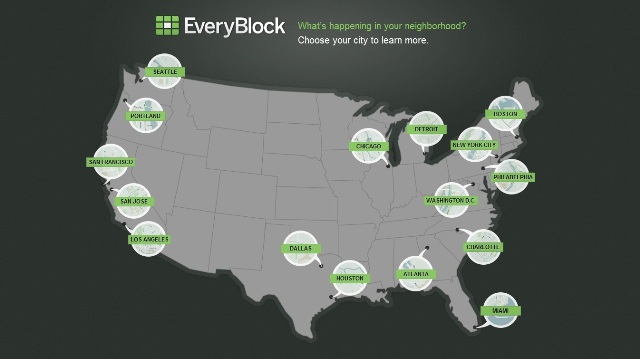
Everyblock –Stay safe in your ‘hood
This crowd-sourced reporting site tells you what’s happening where you are (or where you’re going). Get real-time updates everything from crime reports to claims of suspicious behavior based on police calls, reviews, photos and other reports.
http://everyblock.com is founded by Adrian Holovaty. He lives in Chicago.
Threadflip – Enjoy the never-ending closet
Not everyone can have a bedroom-size-closet with touch-screen personal fashionista like Cher in Clueless. But that doesn’t mean you can’t have an infinite wardrobe. Renew clothes that still have places to go and people to see. Keep your closet clean, your life minimal, your pocketbook happy and still walk out the door every morning feeling great about how you look. Think of it like a ‘naked lady party’ online. Stay tuned for their launch.
http://threadlfip.com is co founded by Jess Brown in San Francisco.
Period Tracker – Stats for when you’ll be cranky
P-Tracker for iPhone tracks your cycle, fertility and your moods. Hello one-stop period data shop! I could do without the rainbows and flowers though.
Iridescent – Learning lab for young women in science
This great program keeps popping up up on my radar. I worked with a sharp high school intern who attended Iridescent. Before I knew it she was prototyping Andorid apps, wow. Iridescent’s goal is to inspire, empower and motivate young women to be curious and knowledge-seeking especially in science and engineering. If you have time for outreach they need local and offsite volunteers.
http://iridescentlearning.org is in New York, LA and the the Northern California Bay Area
I’d love to hear about the services you love or if you think this list is a stack of bologna. Oh but if you want lipgloss sent to you in the mail, Birchbox is really nice.